
"Guangdong agriculture"
100 article(s) found

Guangdong Top Ten famous Brand Tea ranking Yingde Black Tea Yinghong No. 9 Gold Grade 1 Brand Price list
Guangdong black tea is a very rare black tea. A long time ago, it was a very popular tea. But now, there are only a very limited number of tea manufacturers left. In addition, there are too many fakes on the market. Some are even made of golden tea. The real quality is made by Yinghong 9, a special variety bred by Guangdong Tea Research Institute from Yunnan big leaf variety (Assam).

Coffee trees planted in Foshan
Coffee can not do without its aromaticity in the city, but little is known about what coffee looks like. It is only about 1.5 meters tall, oil-green leaves, blossoming small white flowers, bearing red fruit smaller than the fruit of plums, this kind of plain-looking plant, which looks like some unremarkable plants, is the coffee tree planted in Foshan. Foshan can also grow coffee, this is the first time I have heard of it, and

The 2016 China Cooking Competition ended in Guangdong, Hong Kong and Macao.
In addition, related activities with coffee as the theme were held during the competition, such as my favorite live coffee sharing event in Yunnan, as well as the forum "Caffeine Chinese Coffee Power" and so on. The theme of this forum is called China Coffee Power. The organizers invited six representatives of Guangzhou Coffee Industry Association and two specially invited domestic industry experts to analyze the domestic coffee industry around the theme, and
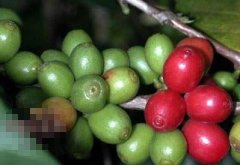
Chinese Coffee trees planted in Foshan
This is the first time I have heard that Foshan can also grow coffee, and the dream of growing coffee has come true in the 74-year-old Feng family. Lao Feng, who came from farming, began to grow coffee under the guidance of his son Feng Shilin, but now he no longer works in the fields, and planting coffee trees has become his playmate after he entered his old age. He grows his own coffee, grinds coffee beans and invites neighbors to drink home-grown coffee drinks. Today, a reporter

History of introduction and expansion of Coffee in early China (5)
1. From the first peak period of the development of China's coffee industry (1952-1961) to the late 1940s, according to recorded figures, there are 2173.33 hectares of rubber plantations in Hainan Island, with a total of 867600 rubber trees, with an annual output of 199,000 tons of dry rubber, and more than 300,000 coffee plants. the annual output of coffee beans is 1 ton. According to a survey in the early 1950s, there was a large amount of coffee left in Fushan area of Chengmai County, with a total of 70,000.

What are the three major brands of Honey Snow Ice City? Michelle Bingcheng invests in Guangdong Huicha Tea Beverage Brand
Milk tea shop is no longer satisfied with dry milk tea, the uneasy status quo of tea like tea is out of bounds and invest in SEESAWCOFFEE. Nowadays, the appetite of Honey Snow Ice City is also growing, and it has been reported that Honeysnow Ice City has set up nine companies a year. The layout of Honey Snow Ice City has accelerated in the southwest and Hainan Province.

Coffee and Bank the first coffee bank opened in Jiangmen, the hometown of overseas Chinese.
Jiangmen Rong and Agricultural Commercial Bank sign cooperation agreement with Taiwan coffee chain brand Bank Coffee Taiwan Coffee Prince Lim Dong-Won shows the coffee that has been made with Xinhui tangerine peel, orange Chen Xiang Guangdong News Network, January 8 / PRNewswire-Asianet /-- Jiangmen Rong and Agricultural Merchants Bank joined hands with Taiwan coffee chain bank to create the first coffee bank in Jiangmen City, the hometown of overseas Chinese.

History of introduction and expansion of Coffee in China in the early stage of Coffee Development (5)
1. From the first peak period of the development of China's coffee industry (1952-1961) to the late 1940s, according to recorded figures, there are 2173.33 hectares of rubber plantations in Hainan Island, with a total of 867600 rubber trees, with an annual output of 199,000 tons of dry rubber, and more than 300,000 coffee plants. the annual output of coffee beans is 1 ton. According to a survey in the early 1950s, there was a large amount of coffee left in Fushan area of Chengmai County, with a total of 70,000.

Guangdong produces coffee. Would you like to try it?
Kopi Luwak, amber coffee, latte, cappuccino. This kind of drink, which originated in Africa, is favored by more and more Chinese people. With the help of this year's World Cup, Brazilian coffee has become popular again, but have you ever tasted coffee made locally in Guangdong?

Coffee planting History of Coffee introduction and expansion in China in the early stage (5)
1. From the first peak period of the development of China's coffee industry (1952-1961) to the late 1940s, according to recorded figures, there are 2173.33 hectares of rubber plantations in Hainan Island, with a total of 867600 rubber trees, with an annual output of 199,000 tons of dry rubber, and more than 300,000 coffee plants. the annual output of coffee beans is 1 ton. According to a survey in the early 1950s, there was a large amount of coffee left in Fushan area of Chengmai County, with a total of 70,000.
The History of Coffee introduction and expansion in China in the early stage (5)
1. From the first peak period of the development of China's coffee industry (1952-1961) to the late 1940s, according to recorded figures, there are 2173.33 hectares of rubber plantations in Hainan Island, with a total of 867600 rubber trees, with an annual output of 199,000 tons of dry rubber, and more than 300,000 coffee plants. the annual output of coffee beans is 1 ton. According to a survey in the early 1950s, there was a large amount of coffee left in Fushan area of Chengmai County, with a total of 70,000.

How about Yinghong No. 9 black tea? Is it good tea? Inquiry on how to choose the price of black tea in Yingjiu Manor
History of Yingde black tea: Yingde black tea, Guangdong Yingde specialty, China National Geographic indication products. The modern tea industry of Yingde began in 1955, when Yunnan Daye tea, a famous tea variety in China, was successfully tested and planted in Yingde, Guangdong for selective breeding; in 1959, Yunnan Daye Zhongcha successfully made Yingde black tea. Since the advent of Yingde black tea, because of its symmetrical appearance and color

When is the first peak period for the development of coffee planting industry in China?
By the end of the 1940s, according to recorded figures, there were 2173.33 hectares of rubber plantations on Hainan Island, with a total of 867600 rubber trees, with an annual output of 199,000 tons of dry rubber, more than 300,000 coffee plants and an annual output of 1 ton of coffee beans. According to a survey in the early 1950s, a large number of coffee was left in Fushan area of Chengmai County, with a total of 70,000 plants, including more than 40,000 plants in Daji Village and Fushan Farm (Hongguang Farm) 1
Current situation of coffee cultivation in Yunnan _ how much is half a jin of Katim coffee _ where can I get coffee beans in Guangdong
Professional coffee knowledge exchange more coffee bean information please follow the coffee workshop (Wechat official account cafe_style) Yunnan coffee cultivation status 1. Yunnan mainly grows small coffee beans, which is what we often call Arabica coffee beans. Among them, Katim coffee bean variety has been developed in Yunnan because of its strong anti-virus ability, high yield, considerable economic value and good quality.
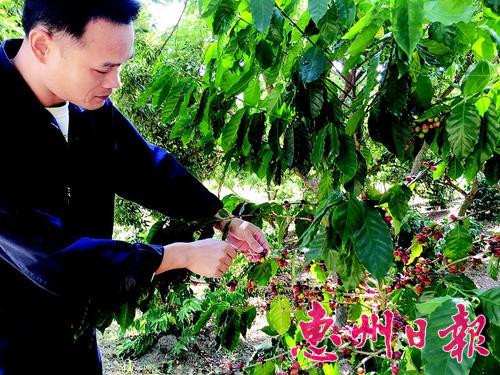
Coffee is also produced in Huizhou, Guangdong. Coffee beans brought by Taiwan businessmen are cultivated and germinated in Huizhou.
Coffee beans cultivated in Huizhou. Coffee beans cultivated in Huizhou. Our reporter Huang Tao Chen Chunhui (Reporter Huang Tao Chen Chunhui) I have heard of Hainan coffee, and Yunnan coffee is also known. Have you tried Huizhou coffee? The reporter learned yesterday that African coffee is also quietly planted on many hillsides in Huizhou. After years of trial, it is now known as African coffee.
Analysis on the Development Environment and advantages of Coffee Industry in Yunnan Province
Analysis on the development of coffee consumption at home and abroad from an international point of view, the world is in a trend of steady growth.
Coffee planting History of Coffee introduction and expansion in China in the early stage (3)
1. Investigation on the year of coffee introduction in Hainan Island in 1898 1.1 the age of the early introduction of coffee in Hainan Island is indisputably expressed as 1908 in many local chronicles, agricultural history, agricultural history and various books and periodicals in China. However, the remains of the century-old coffee trees in Hainan Island are still there, and the descendants of the ancient trees are still there. Therefore, the century-old coffee trees that actually exist in Hainan have unequivocally rewritten Hainan.

History of introduction and expansion of Coffee in early China (3)
1. Investigation on the year of coffee introduction in Hainan Island in 1898 1.1 the age of the early introduction of coffee in Hainan Island is indisputably expressed as 1908 in many local chronicles, agricultural history, agricultural history and various books and periodicals in China. However, the remains of the century-old coffee trees in Hainan Island are still there, and the descendants of the ancient trees are still there. Therefore, the century-old coffee trees that actually exist in Hainan have unequivocally rewritten Hainan.
The History of Coffee introduction and expansion in China in the early stage (3)
1. Investigation on the year of coffee introduction in Hainan Island in 1898 1.1 the age of the early introduction of coffee in Hainan Island is indisputably expressed as 1908 in many local chronicles, agricultural history, agricultural history and various books and periodicals in China. However, the remains of the century-old coffee trees in Hainan Island are still there, and the descendants of the ancient trees are still there. Therefore, the century-old coffee trees that actually exist in Hainan have unequivocally rewritten Hainan.

A Survey of Chinese Coffee Culture on the introduction of Coffee in Hainan Island in 1898
1.1 the age of the early introduction of coffee in Hainan Island is indisputably expressed as 1908 in many local records, agricultural history, agricultural history and various books and periodicals in China. However, the remains of the century-old coffee trees in Hainan Island are still there, and the descendants of the ancient trees are still there. Therefore, the actual existence of the century-old coffee trees unequivocally rewrote that the earliest introduction of coffee in Hainan Island should be in 1898. 1.2